
Alone in the Void [Part 6]: The Final Descent: Memories, Messages, Lessons, and Gratitude (Day II)
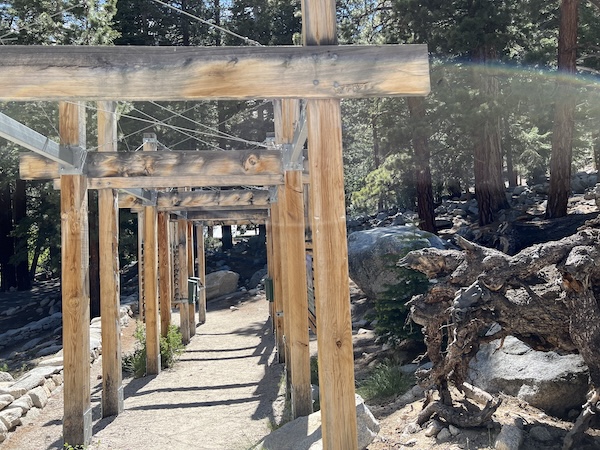
“Every summit leaves a mark, but it’s the entire experience—the highs, the lows, the challenges—that stays with you long after you return.”
~Echoes of the Climb
Table of Contents
12:45 PM – Wrong Turn… AGAIN!
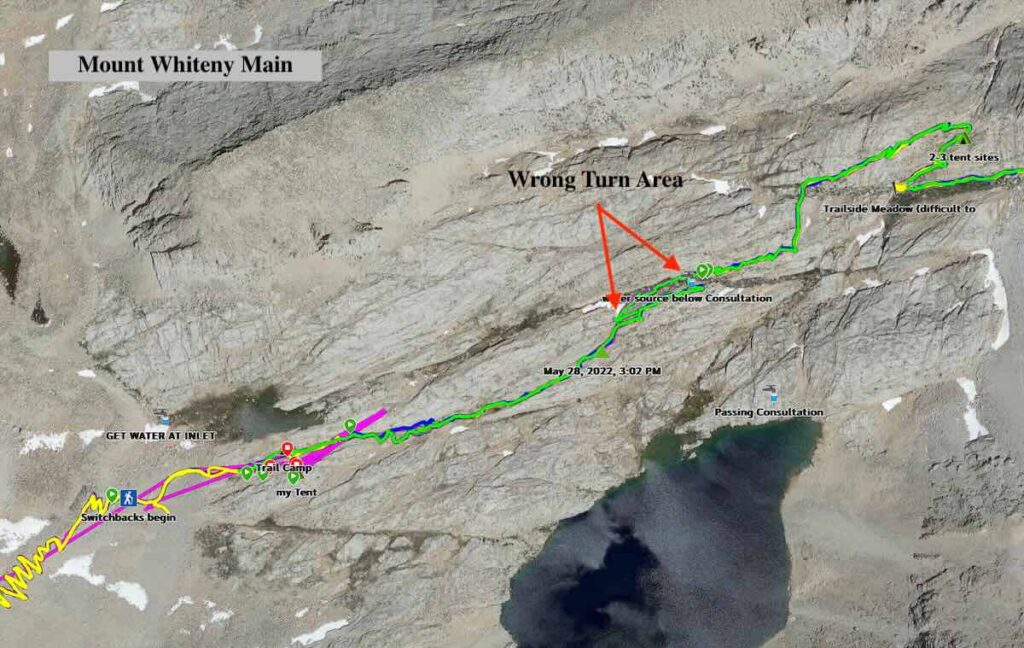
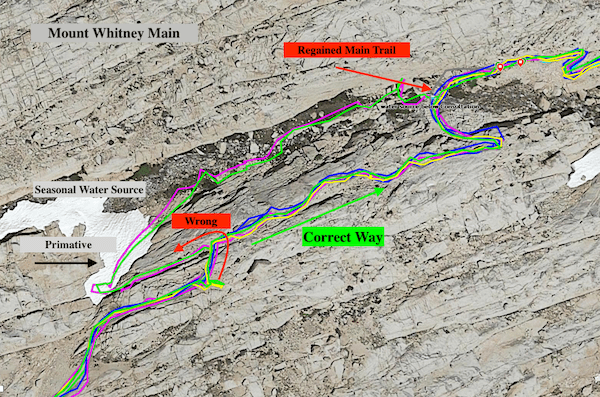
This is a little embarrassing, but just outside Trail Camp, there’s a rough path leading down to a primitive campsite and a seasonal stream—just before you cross the Lone Pine Creek trail bridge heading toward Trailside Meadow. The actual trail bends down and away, just out of sight, but the path to the campsite always seems so obvious to me. For whatever reason, I ignore my Garmin smart watch’s “Off Course” alert (which, to be fair, goes off constantly during switchbacks—I really need to adjust those settings) and blissfully head down a path that, deep down, I know is too rough and loose with scree to be the main trail. Despite that nagging voice in my head, momentum carries me forward. Before long, I realize I’ve made the exact same mistake I did on my last trip during the shoulder season.
I can’t help but laugh. Did I really do it again?
The last time, I also wandered down to this primitive campsite and seasonal stream (which, by the way, was mostly dry). Checking my Garmin Explore app, I see that I can reconnect with the main trail just past the Lone Pine Creek trail bridge. Weary of the thick scrub ahead, I squeeze through the rocks and brush and, thankfully, reconnect with the main trail—once again.
What did I learn? Well, probably not much at first glance! But here’s the takeaway: next time I make a wrong turn, I’ll retrace my steps back to the main trail rather than gambling on an alternative route. In this case, I could easily bypass the scrub and rocks to rejoin the trail, but in other situations—or when snow and ice are involved—it might not be so straightforward. Lesson learned.
One rule I live by: never descend or ascend anything I can’t easily backtrack. This helps me avoid getting “cliffed out.” As I mentioned in a previous post, people often get stuck after lowering themselves into areas they can’t climb out of or ascending rock faces they can’t safely descend.
Moments like this remind me that no matter how familiar I am with a trail, the wilderness has a way of humbling you. It’s a reminder to stay alert, trust my instincts, and remember that even small mistakes can snowball into bigger problems in the mountains. The key is to always learn and adapt.
1:35 PM – Trailside Meadow: A Refreshing Reset
Trailside Meadow, the charming little spot beside the trail, is just as welcome on the way down as it was on the ascent. It’s the perfect place to take a breather, filter water, and do what some hikers call ‘camel up’ (drink a lot while you have the chance to refill before moving on). After the long descent from Trail Crest, stopping here feels like a refreshing reset. I take a quick break, filter some water, and down a caffeinated GU Energy Gel—clearly needing a mental boost after my earlier wrong turn. With this brief recharge, I’m back on my way.
Moments like this—taking time to rest and refuel—are essential. On long hikes, they’re not just a physical necessity but also a mental reset, keeping you sharp and focused for the trail ahead. It’s easy to overlook the importance of these pauses, but they’re as vital to the journey as the miles themselves.
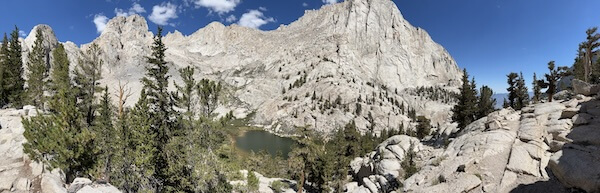
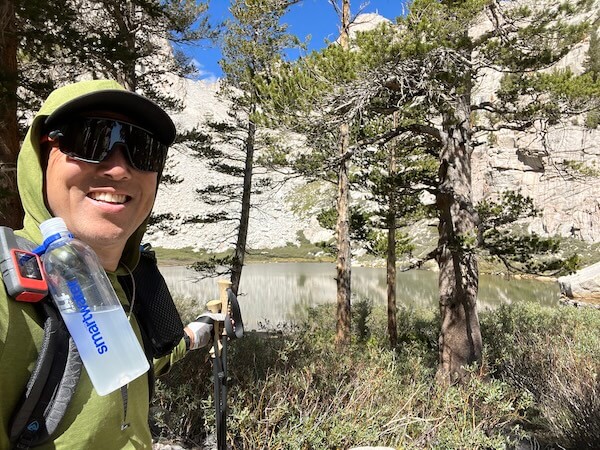
2:05 PM – The Shifting Beauty of Mirror Lake
As the afternoon shadows stretch across the water, it’s a reminder of how the landscape transforms throughout the day. Familiar sights take on new character, and even though this is my fourth time seeing Mirror Lake, the changing light makes each visit feel unique. There’s a subtle shift in the atmosphere, almost as if the lake itself adapts to its own rhythm, never quite the same.
2:25 PM - Outpost Camp: The Weight of a Message
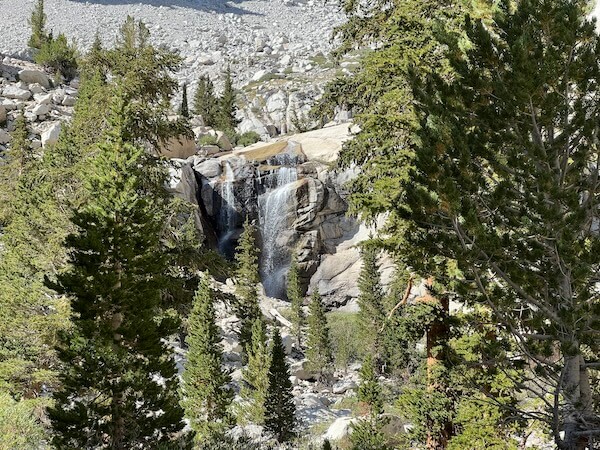
I’ve finally made it back down to Outpost Camp, where I spot the seasonal waterfall and my lunch spot from the day before. As I’m soaking in the beautiful scenery, a lone figure appears in the distance, making their way up the trail. Something seems off, but I can’t quite put my finger on it. His gait is slow and uneven, like he’s carrying a heavy load, but nothing stands out at first glance.
As he gets closer, his labored steps become more obvious. I still can’t fully make out the details—his head is down, and the brim of his hat casts a shadow over his face. There’s something more, though—something I can’t quite see yet. Under the shadows of the trees, his form looks bulky, but I can’t tell why. Finally, as he draws near, I see it: two backpacks—one strapped to his back and another awkwardly worn backwards across his chest. Despite his clear burden, when he looks up, there’s a tired but friendly smile beneath the brim of his hat.
Clearly struggling under the weight, he approaches and asks if I’ll do him a favor. His wife and father, he says, should be trailing about 15 minutes behind, and he asks if I can pass along a message.
agree, and he tells me to ask them to continue up the mountain to Trail Camp (at least a couple more hours!). He warns that his father won’t be happy—he’s expecting to camp here at Outpost Camp—and admits he tried to convince him otherwise. The Mount Whitney hike is hard, what is harder is navigating difficult family dynamics! Reluctantly, I agree to pass along the message, though I feel uneasy about walking into what feels like a trap.
Sure enough, I meet the wife (who has her pack) and the father, who’s holding only a water bottle but no backpack, and relay the message. As expected, the father grumbles but thanks me for delivering it. I quickly move on, happy to avoid any family drama on this trip! Even on a solo adventure, you never quite escape the occasional, unexpected role of messenger or mediator. It’s all part of the unpredictability that makes every trip memorable.
2:40 PM - Bighorn Meadow: Saying Goodbye with a Tingling Reminder
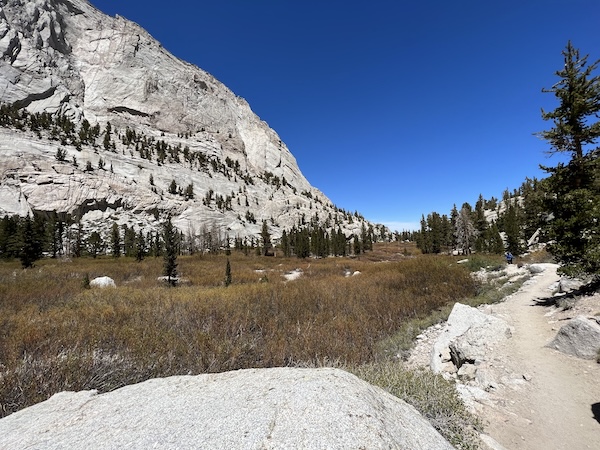
I had forgotten the small uphill section exiting the meadow, but I remember it now. I look back and say goodbye to this lovely meadow and smile in appreciation. One thing I’ve noticed as I’ve continued to descend the mountain is some mild tingling in my cheeks and lips. It’s not painful or bothersome, just noticeable. I believe it’s possibly a side effect of the Diamox I’ve been taking to prevent AMS. Little reminders like the tingling in my face are a testament to how much altitude and the precautions we take—like Diamox—can affect the body. It’s all part of being prepared and aware during a climb like this. You should consult your doctor if you’re considering the use of medications on the trail.
3:10 PM - Lone Pine Lake Junction: The Mountain's Subtle Reminder
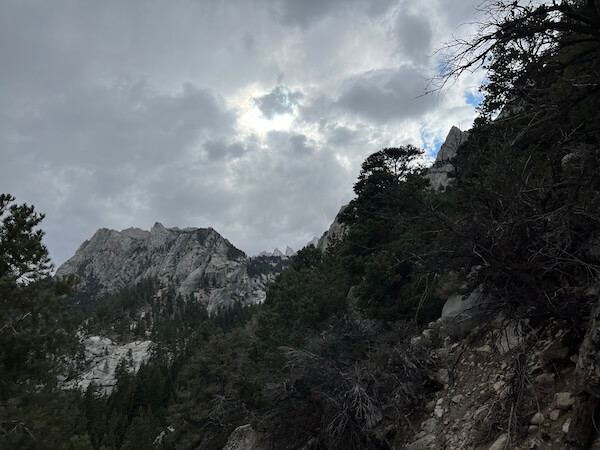
Moving at a steady clip now, I pass by the trail junction to Lone Pine Lake. Maybe one day I’ll camp there and do some fishing, but for now, I can sense the end is near. Over the last couple of hours, darker clouds have started rolling in, and one reason I’ve picked up the pace is to avoid being caught in an afternoon shower—typical in the Sierras. Sure enough, a light drizzle begins. It’s heavy enough to consider pulling out my rain jacket, but not quite enough to warrant the hassle of digging it out. Luckily, today the rain doesn’t amount to much.
The drizzle feels like a gentle nudge from the mountain, reminding me it’s not quite done with me yet. Moments like this remind me that no matter how prepared I feel, the mountain is always in charge until I’m safely back at the car.
🛡️ BE PREPARED: Mountain Weather
Mountain weather is always unpredictable, and moments like this are a reminder of how quickly conditions can shift. That’s why preparation is key, but it’s also important to know when to adapt on the fly. Always keep essential gear like your rain jacket within easy reach—just in case the weather changes faster than you can react. Sometimes, you just have to trust your instincts and move with the rhythm of the trail.
4:10 PM – The Fork That Changed the Journey: Friends Remembered
In the blink of an eye, an hour has passed, and I’ve reached the North Fork of Lone Pine Creek and the Mountaineers Route Fork. Maybe one day I’ll attempt the Mountaineers Route—likely with a guide. As I stand here, I can’t help but reflect on how much this spot has shaped my journey. Just yesterday, I met my trail friends at this very fork, and their encouragement helped push me forward. Their presence made the experience more meaningful, especially during my secluded summit. It’s moments like these that remind me of the power of connection, even in the solitude of the mountains. Those chance encounters on the trail leave a lasting impression—adding a layer of camaraderie that, in many ways, made my solo journey even richer.
As the iconic Mount Whitney hike draws closer to its conclusion, I descend further down the well-worn trail, with Whitney Portal Road growing larger in my field of vision. Dark clouds still linger overhead, and the light rain that has accompanied me could go either way—intensifying or fading completely. But in this moment, the rain stops, almost as if the mountain itself is granting a quiet pause, offering space for reflection. Intellectually, I know the weather and my reflections are unrelated—nature is indifferent—but in this moment, it feels as though the mountain is in sync with me. An overwhelming sense of gratitude floods in—grateful to be alive, healthy, and fortunate enough to experience adventures like this.
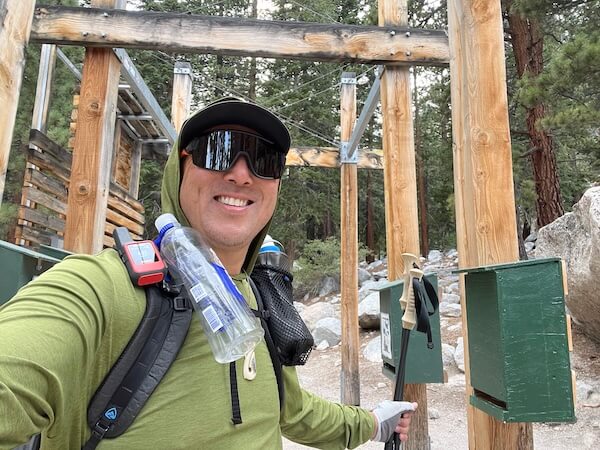
4:30 PM – Safely Arrive at Mount Whitney Portal & Memories Flood In
As I walk, wonderful memories start to flood my mind—the excitement, anticipation, and uncertainty I felt at the beginning of this hike, wondering if something would turn me around like last time or if I’d make it to the top. I recall the wildlife I encountered along the way: the young deer in Bighorn Meadow, the deep whomping sounds of a Dusky Grouse, the curious and bold marmots at Trail Camp, and—luckily—the absence of any bear sightings. I think about the two instances of rockfall I witnessed, one just above Trail Camp and the other farther away on the hillside behind Guitar Lake.
The incredible moments of solitude in the forests and granite slabs, and the difficult moments in complete darkness, all affected me in unique ways. Meeting interesting and unique fellow hikers—each connected by a shared goal and the mutual suffering that comes with being a backcountry explorer—added richness to the experience.
As these memories start to fade, the iconic wooden beams of the Whitney Portal Arches come into view. I’ve made it—a safe summit and return from the highest point in the contiguous United States, Mount Whitney, 14,505 feet. As I pass through the arches, I realize that while this journey is complete, the memories and lessons from this hike will carry forward into every future adventure. Every summit leaves a mark, but it’s the entire experience—the highs, the lows, the challenges—that stays with you long after you return.
As I reach the car, dismounting my pack and dropping my hiking sticks, my mind begins to wander. I wonder what’s next, what new challenges await, and what I will find beyond One More Summit.
Another awesome segment of your hike I feel like I took myself (without the effort). I know from your words that it’s the actual experience that makes the journey so rich and priceless filled with memories that can only happen by actually walking that path. Thanks for sharing such a warm and thoughtful trip to Mt Whitney. Ascending and descending. That’s my important lesson. Ascending is only half the trip and the importance of the descent. 🙏 with gratitude