Embracing The One: Review of Gossamer Gear’s Tent That Redefines Ultralight Reality
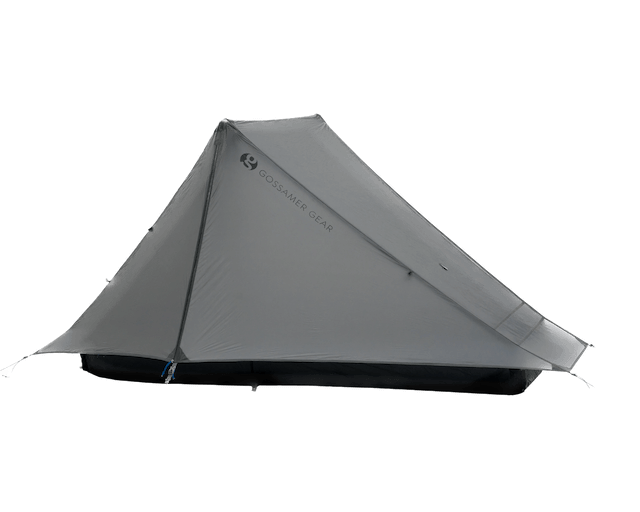
Table of Contents
The Best 1 Person Backpacking Tent That Won't Break the Bank
Gossamer Gear’s The One stands out as one of the best ultralight solo backpacking tents at a reasonable price. It’s a unicorn in the ultralight tent market, offering an impressive combination of minimal weight, a relatively spacious interior for solo hikers, and a price point that makes it accessible without compromising on quality.
For ultralight backpackers, the ongoing quest is to find gear that perfectly balances weight, functionality, and cost. The One by Gossamer Gear checks all these boxes, with an attention to detail that sets it apart in the ultralight community. Before diving into the reasons this lightweight backpacking tent is a game-changer, let’s explore the key features that make it an ideal choice for backpackers looking to cut weight without sacrificing too much comfort.
Why it's great:
- Ultralight
- Durable & Highly Water Resistant
- Spacious
- Large Single Vestibule
- Reasonable price (for a UL tent)
- Cottage Company/ Unmatched Ingenuity
Limitations:
- Single Wall (prone to condensation)
- Requires 2 Trekking Poles
- Silnylon (can sag when wet)
- Pitch (Requires more careful pitching vs. free-standing tents)
Why It’s Great
Weighing in at 17.7 ounces (including attached lines and excluding stakes and trekking poles), you’ll be hard-pressed to find a lighter tent of this quality and price range. Other fully enclosed trekking pole tents of comparable weight and quality often come at more than double the price, while similarly priced DCF backpacking tarps lack the full protection of a true tent—because, well, they’re just tarps.
Ultralight
Durable and Highly Water-Resistant
The One is built to withstand the elements, made from 10 denier ripstop SIL nylon that’s rated to resist 1,800mm of water pressure. The hydrostatic head of 1,800mm means that this fabric can withstand a column of water nearly 2 meters high before leaking. Solid for 3 season backpacking but NOT extreme weather conditions (snow or prolonged rain).
Spacious
Before you get too excited, let’s remember we’re talking about a minimalist, one-pound, 1-person backpacking tent—it’s going to be small! But the areas that it excels the most at are the ones that matter most, such as shoulder room when sitting up. Since many ultralight tents are built in a somewhat A-frame shape, shoulder space tends to suffer. Ever brushed your arms on the condensation of a single-wall tent? It’s not pleasant the first thing in the morning!
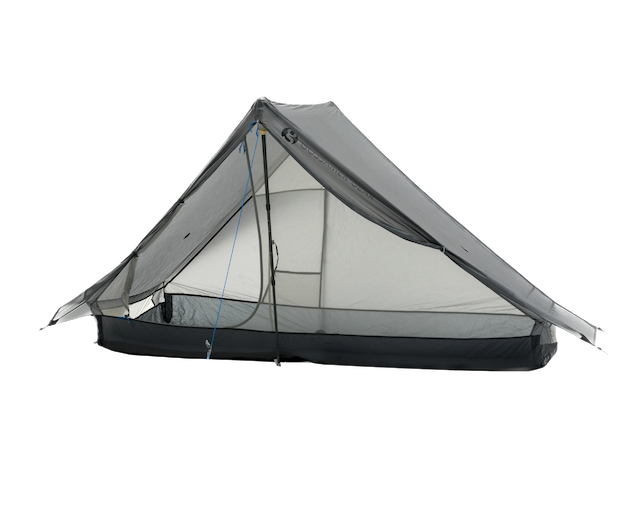
The lateral “V” shape created by tilting the tops of the trekking poles outward creates just the right amount of shoulder space at the top of the tent. This has been especially helpful when changing clothes or sitting up, which is the position you’re in most of the time when you’re not sleeping. Additionally, The One features a catenary arch along the ridgeline, helping to keep the tent taut and preventing the common sagging that occurs in the center of many tents when condensation or rain adds weight to the fabric.
🛤 Side Trail: A Tangent Worth Exploring
This catenary arch design also brings to mind a fascinating connection I first encountered in Dan Brown’s Origin, where Antoni Gaudi’s innovative use of catenary arches inspired me to visit his attic apartment at Casa Milà in Barcelona. While the purpose in The One is different, it serves a similar role in maintaining structural integrity—keeping the tent taut and functional, even in challenging conditions.
Large Single Vestibule
With all 1 person backpacking tents, you’re generally going to need to store your backpack, shoes, and other backpacking gear outside the main body of the tent and in the vestibule, as there’s simply not enough space inside the tent. Vestibules act as a covered area outside the tent where gear can be stored, offering protection from the elements while keeping the inside of the tent clear.
Gossamer Gear The One provides 10 square feet of functional surface area inside the vestibule. This is important because, during a rainstorm, water can either bounce under the edge of the vestibule or creep in if it begins to pool outside. The extra space allows you to place your pack and shoes far enough away from the edges, keeping them dry and protected—well done, Gossamer Gear!
Reasonably Priced at $255
Gossamer Gear’s The One strikes the perfect balance in the ultralight tent market. While there are a few cheaper options out there (and many more expensive ones), few can match its combination of weight, durability, and performance. Compared to other ultralight 1 person backpacking tents, which can easily run upwards of $600, The One offers incredible value without sacrificing quality.
Cottage Company with Unmatched Ingenuity
One of the true OGs of ultralight backpacking equipment, Gossamer Gear, based in Austin, Texas, is another proud USA-made cottage company that represents the innovation and craftsmanship typical of the ultralight community. Despite their growth, they remain committed to their roots, offering personal customer support and innovative designs that larger brands often can’t replicate.
Limitations
Single Wall (Prone to Condensation)
As with all ultralight backpacking gear, there’s usually an asterisk somewhere. Single-wall tents come with one significant caveat when compared to their heavier, double-walled counterparts, which feature two layers: an inner mesh and an outer rainfly. That caveat is without proper ventilation, condensation can form on the inside walls of the tent. The One combats this with really good ventilation.
Opposite the main single door, the tent features another smaller vestibule (not accessible from the inside) that is large enough to shield the occupant from the elements while also promoting crucial ventilation, which is essential in this tent design.
Requires 2 Trekking Poles
This tent requires two trekking poles (or two aluminum poles sold separately for $38 and 2.85oz/pole) for proper setup. I love my Gossamer Gear LT5 Three-Piece Carbon Trekking Poles ($195), which work perfectly with The One. At just 4.9 oz each, they are the lightest collapsible three-piece carbon poles I’ve found, and they come with me on nearly all my backpacking trips. However, for more technical mountaineering trips, where The One is not be the ideal tent, I use my Black Diamond First Light 4 season backpacking tent and Black Diamond Alpine Carbon Cork Whippet Ready Trekking Poles (8.8 oz)—but that’s a story for another review.
Silnylon (Can Sag When Wet)
Although Gossamer Gear has taken steps to minimize sagging—such as incorporating a catenary cut on the seams for a more taut and stable pitch—this tent is made from Silnylon, a fabric known for stretching slightly and sagging when exposed to moisture from condensation or rain. This differs from Dyneema Composite Fabric (DCF), which resists stretching and sagging more effectively. While DCF is lighter and offers superior water resistance, it comes at a much higher price and is often noisier due to its stiffer texture, which crinkles in the wind.
Pitch (Requires Practice to Set Up)
Properly pitching a trekking pole tent is a skill that involves multiple steps and requires some practice to perfect. I’ll dive into more detail below, but the essentials come down to selecting a good tent site, ensuring careful staking, and correctly positioning both the trekking poles and guy-out points.
In the Field
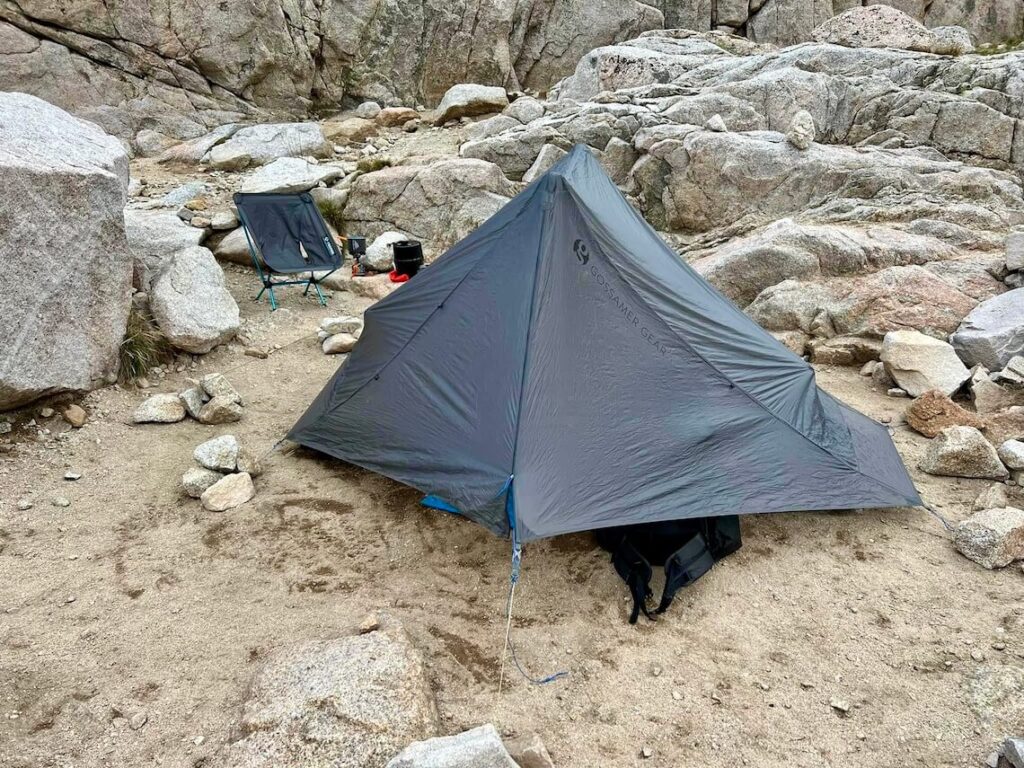
I’ve used this ultralight backpacking tent on my 2 day solo backpacking trips to Mount Whitney during the Summer (late August) and shoulder season (late May). It performed well on both trips at Trail Camp on the Mount Whitney Main Trail from Whitney Portal just west of Lone Pine, California. It provided great ventilation in the warmer summer months as well as protection from the elements during a late May trip where some snow was still present and nighttime temperatures dipped into the mid 20’s. As discussed in my other review, my Enlightened Equipment quilt kept me warm and toasty.
Trekking Pole Tent Setup (Applies to All Trekking Pole Tents)
Unlike freestanding, lightweight backpacking tents—which you can almost just stake, set, and forget—trekking pole tents require a more thoughtful setup to ensure a good, safe night’s sleep in the backcountry
Site Location is Key - Larger Footprint
Trekking pole tents need taut guy lines on multiple sides, often requiring a larger, clear area to pitch properly. Finding the right spot with ample space is crucial.
Make the most of natural features like large boulders, trees, or natural windbreaks to shield your tent from wind and rain. This is especially useful in exposed areas like Trail Camp on Mount Whitney, where strong winds are common. Don’t Let It Be You! Every year, tents that aren’t staked down properly are blown off the mountain. Utilizing these natural barriers can significantly improve both the stability and comfort of your setup.
Pitching on Soft Soil
Angle your stakes correctly and reinforce them with large rocks to prevent them from pulling out due to wind or the tension that trekking pole tents often require.
Pitching on Rock, Hard, or Frozen Soil
Use the Big Rock, Little Rock technique, which doesn’t rely on traditional stakes, to secure your guylines. Note: This method takes practice, and the backcountry—especially when you’re cold, tired, or at high altitude—is not the ideal place to learn! Make sure to master it before you hit the trail.
Guyline Setup
Anticipating the rocky terrain at Trail Camp on Mount Whitney, where staking into soil may not be possible, I adapted the guy lines of The One to accommodate the Big Rock, Little Rock technique. I used 2mm non-stretch REI nylon cordage to create longer guylines, which allow for more versatile anchor points using rocks. To keep additional weight at a minimum, I connected the corner of the bathtub floor to the rain flap (part of the tent body), merging them into a single line. This adjustment simplifies setup and reduces the need for extra lines. As with many experienced hikers, you’ll find that over time you’ll customize and modify your backpacking gear kit to better suit your personal needs and the environments you encounter.
Groundsheet
While not the most durable material, Polycro offers an ultralight (1oz), cost-effective option for protecting the floor of your tent. It’s tough enough to withstand the occasional rough surface, making it far preferable to risking damage to the bathtub floor. Although it may not last as long as heavier-duty alternatives like Tyvek (~3-4oz), its balance of weight savings and functionality makes it a popular choice for ultralight backpackers. Just be mindful to inspect it regularly, as it can develop wear or small tears over time.
Conclusion: The One for Ultralight Backpacking
In the quest to find the best backpacking gear, where every ounce and every dollar count, there’s always that one piece of gear that rises above the rest. Gossamer Gear’s The One does just that. It delivers nearly everything that other elite 1 person backpacking tents offer, but at less than half the cost. It’s designed to provide just enough protection, space, and ease of use to make you wonder why you ever carried more. The One opens up new possibilities on the trail, as it did for me—cutting over 3 pounds off my base weight!
Bottom Line tl;dr
Why you might want to think twice
If you’re not ready to fully commit to the ultralight philosophy, The One may seem a bit spartan. Setting it up requires practice, and its minimalist trekking pole design isn’t as forgiving as traditional freestanding tents. It’s also important to note that it won’t provide the same level of protection in extreme conditions as heavier, more robust shelters.
Why you’ll love it
When you’re ready to shed the extra weight without draining your wallet, The One shines. Its thoughtful design maximizes every ounce, providing ample space and protection for solo adventures. If you’re looking for even more room, with an additional door and vestibule, Gossamer Gear offers—yes, you guessed it—The Two. Once you experience the freedom of moving light and staying secure in the mountains, you’ll wonder why you didn’t make the switch sooner. For those who seek simplicity without sacrificing performance, this tent really is The One.