
Alone in the Void [Part 2] – Securing Camp and Gearing Up for the Summit [Day I&II]
“If you can’t see stars, don’t go.”
~ Mountaineering Adage
Table of Contents
1:50 PM – Camp Set Up & Big Rock, Little Rock
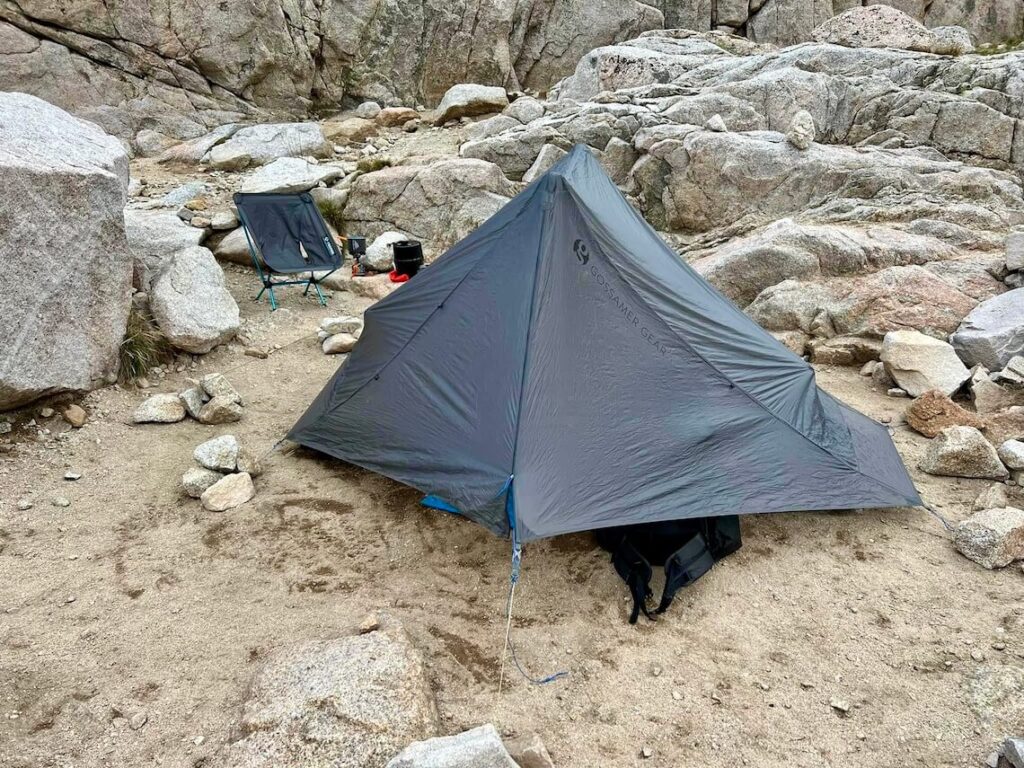
Getting to Trail Camp earlier on this Mount Whitney hike means more choices for campsites. I utilize the Big Rock, Little Rock technique to anchor and set up my 1-person ultralight backpacking tent. This ensures stability, even in high winds, making it a reliable method in the alpine environment. Last time, I barely managed to find an empty spot, but today there are only about five tents set up, leaving many sites to choose from. I opt for a spot next to a large rocky barrier, offering some shelter.
After dismounting my pack, I kneel down on my Zpacks Zseat to begin setup. I lay out my Polycro groundcloth, followed by my Gossamer Gear The One tent, and get straight to work. Once the tent is secure, I position my Gossamer Gear 1/8” foam pad, which serves primarily as a puncture barrier but offers a tiny bit of extra insulation and prevents the pad from sliding beneath me.The main insulation, however, comes from my Nemo Tensor Ultralight Insulated Sleeping Pad, which I inflate using my FLEXTAILGEAR Pump—a luxury I’m especially grateful for, as it spares me from lightheadedness at this Mount Whitney elevation.
📖 DEFINITION: Big Rock, Little Rock Technique
A method used to secure tent guylines when the ground is too hard, rocky, or frozen for traditional stakes. To use this technique, you form a loop in the extended guyline and attach a small rock to it. Then, place a larger, heavy rock atop the guyline, between the small rock and the tent. The large rock acts as a stopper, holding the small rock (and guyline) firmly in place. This setup anchors the tent in difficult terrain, but requires modification or extension of most tent anchor points/ guylines and takes significant practice to perfect. At Trail Camp, where the rocky terrain often makes traditional staking difficult, this technique is invaluable for keeping tents secure in high winds.
2:50 PM – Trail Friends & Change of Plans
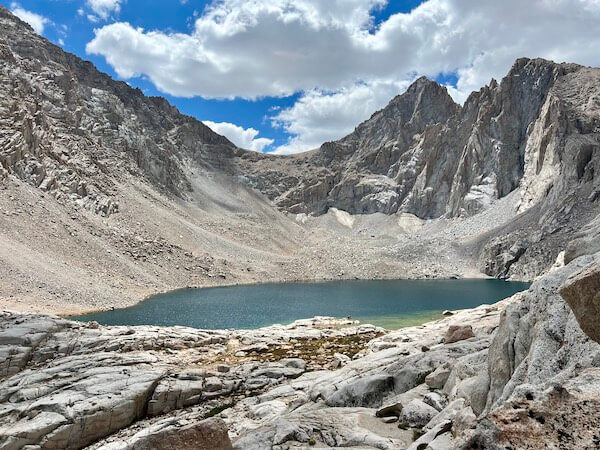
With camp set up, I head to the Tarn to filter water, choosing the inlet side to reduce the risk of contamination. It’s sad, but occasionally wag bags can be seen floating in the tarn—a sobering reminder of how crucial it is to handle waste responsibly. These bags often end up in the water due to improper disposal by hikers who may not fully understand the impact of their actions or the fragility of alpine environments.
As I fill my HydraPak Seeker 4L water bag and cap it with my Katadyn BeFree filter, I spot the three hikers I met earlier at North Fork Lone Pine Creek, near the Mount Whitney Trailhead. After chatting for a bit, we talk summit plans, I decide to adjust my departure time to around 3:00 AM to match their pre-dawn start. Originally, I had planned to leave at 4:00 AM, but I figure as long as the weather holds, an earlier start will be beneficial. Things always tend to take longer than expected in the backcountry, especially at high altitude.
🌲 TRAIL STEWARDSHIP: Proper Waste Management
To preserve pristine water sources and protect the natural environment, it’s crucial to properly pack out ALL solid waste—both human and food—and to use designated disposal areas. On Mount Whitney, the only human waste disposal point is at Whitney Portal, so hikers must carry out all human waste from the trail using WAG bags provided at the trailhead. It’s important to remember that it’s not just human waste that impacts the wilderness—food waste can also have damaging effects. If you're like me and tend to lose your appetite at altitude, be careful not to prepare more food than you can eat. Disposing of uneaten food in the wilderness—whether hidden behind a rock or left at camp—can encourage wildlife, like marmots, to rely on human food. This disrupts their natural behavior and can negatively impact their ability to survive.
5:30 PM – Dinner and Rockfall Spectacle
Dinner tonight is a Peak Refuel Pasta with Meatballs, one of my favorite backpacking meals for its hearty flavor and easy preparation with my JetBoil Stash cook system. While I wait for it to finish, I sip on some electrolytes, making sure to hydrate properly after a long day of hiking.
Since arriving at camp, I’ve been drinking plenty of water to stay hydrated, but now I start cutting off my liquid intake to avoid frequent nighttime bathroom trips—getting out of a warm sleeping bag in the cold is something I’d rather avoid!
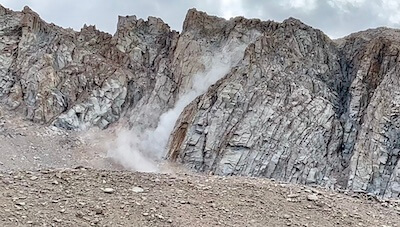
Just as I settle in to eat, a low, thunderous crack catches my attention. A few hundred yards away, to the left of the 99 switchbacks, a section of the cliffside breaks loose in a massive rockfall, sending debris crashing down and dust pluming into the air. I manage to capture part of the spectacle on my phone, feeling both awe and a slight nervousness. It’s moments like this that remind me of the power and unpredictability of these mountains, and just how alive the landscape truly is.
⚙️ GEAR & TECH: Altitude Cooking Tips
At higher altitudes, water boils at lower temperatures due to reduced air pressure. This means it takes longer to properly rehydrate dehydrated meals, such as freeze-dried backpacking dinners. For example, at 12,000 feet, water boils at around 190°F instead of the usual 212°F. To ensure your meal rehydrates fully, you may need to let the water boil longer to get hot enough or allow more time for the food to absorb the water. Insulating your meal in a cozy after pouring the hot water can help maintain heat and improve the rehydration process.
6:25 PM –The Great Toothpaste Tab Blunder
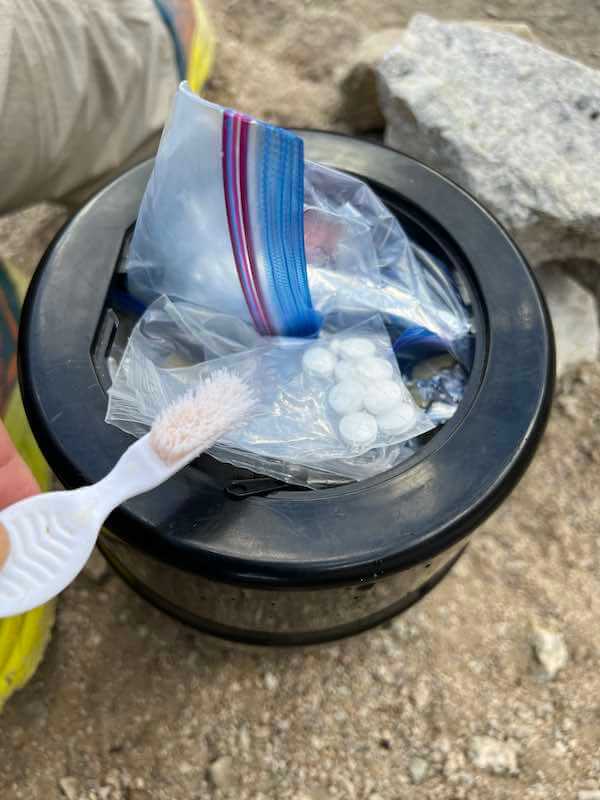
Every time I see this photo in my camera roll, it makes me laugh—one of the many reasons I keep it! After dinner, I decided it was time to wrap things up outside the tent and settle in for the night. As dusk descended on my camp, I pulled out a small ziplock baggie holding my toothpaste tabs (I purchased a pack of about 50). I popped one in my mouth and started to chew, expecting it to soften and liquify, but it was incredibly bitter.
Since it was my first time using this brand of toothpaste tab, I figured maybe it just had a strange coating. So, I took a small sip of water and swished it around, but it was still horribly bitter! Just then, it hit me—I’d used the same small ziplock bags for both my toothpaste tabs and my Diamox altitude sickness tablets, which look pretty similar in low light! I spit it out in a few dramatic splutters, half-laughing at my mistake.
Needless to say, I marked the bag clearly with a Sharpie after that and grabbed the right tabs to finish the job. Just another reminder to keep a good attitude (and well-labeled bags) on the trail!
Conclusion: The Calm Before the Climb
As the late afternoon slowly transitions into night, the silence of Trail Camp, broken only once by the massive clatter of rockfall, brings a sense of anticipation. Tomorrow’s summit push feels closer now, with the infamous 99 switchbacks waiting just beyond the horizon. Thanks to a discussion with my fellow trail friends, the climb starts early—earlier than I’d planned. But out here, it’s all about adapting, and I’ll need every bit of focus for the ascent. Will my body hold up as I take on the 99 switchbacks? What lessons will the mountain have in store for me this time?